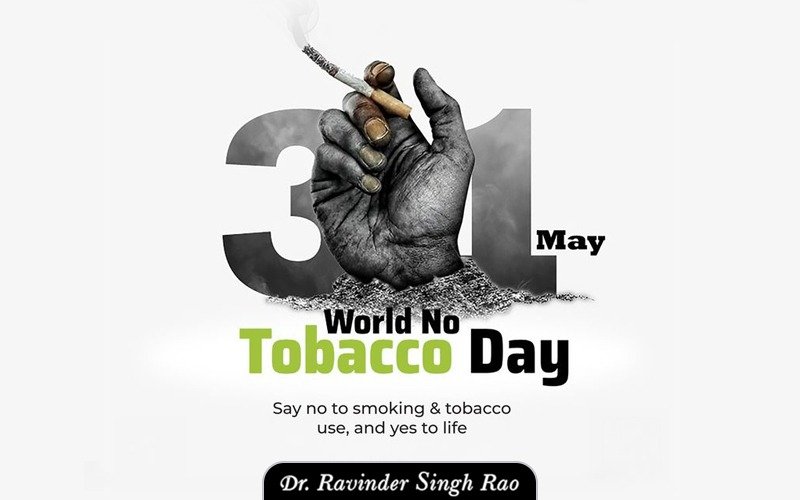
Every May 31st, the globe takes a moment to address one of the most avoidable health emergencies in human history. Every year, tobacco use kills around 8 million individuals worldwide. It is responsible for around 1.35 million deaths in India alone per year, or more than 3,700 deaths per day, or 154 deaths per hour, due to a drug whose dangers have been known for decades. This is the crisis that World No Tobacco Day 2026 addresses. On World No Tobacco Day 2026, Dr. Ravinder Singh Rao guides people to understand that tobacco is one of the leading preventable causes of serious health problems, especially heart and lung diseases. He highlights that tobacco use and smoking seriously raise the risk of heart attacks, stroke, and long-term organ damage in addition to harming the lungs.
He promotes a tobacco-free lifestyle among young people and adults through his awareness message, emphasizing that early cessation can greatly enhance general health and life expectancy. Dr. Ravinder Singh Rao also emphasizes educating people, running awareness campaigns, and encouraging regular health check-ups to help prevent tobacco addiction within the community.
The 2026 Theme of World No Tobacco Day
The official WHO theme for World No Tobacco Day 2026 is “Unmasking the Appeal: Countering Nicotine and Tobacco Addiction.”
The theme is based on a harsh reality: the tobacco and nicotine industries have orchestrated a rebirth despite decades of progress in lowering traditional tobacco use. Instead of defending cigarettes, it has achieved this by developing a completely new product category that is meant to look contemporary, safe, and even appealing. E-cigarettes come in hundreds of candy flavors and fruit.
How Tobacco Causes Cancer and Other Diseases
The adverse impacts of tobacco on the human body are caused by several overlapping biological processes.
Tobacco-Related Cancers and Diseases
At least 70 of the more than 4,000 compounds included in tobacco smoke are known carcinogens. When these substances enter the body through ingestion, inhalation, or mucosal absorption, they harm healthy cells’ DNA, interfere with regular cellular repair processes, cause chronic inflammation, and eventually create the conditions necessary for malignant transformation. Tobacco smoking is known to cause cancer of the lung, oral cavity, nasopharynx, larynx, esophagus, stomach, pancreas, liver, kidney, urinary bladder, uterine cervix, and bone marrow, according to the International Agency for Research on Cancer (IARC).
Other Diseases Caused by Tobacco
The disease burden of tobacco extends well beyond oncology. The main non-cancerous effects of tobacco smoking include the following conditions:
- Chronic Obstructive Pulmonary Disease (COPD): The main cause of COPD is tobacco use, which causes the lung’s air sacs and airways to gradually and irreversibly deteriorate. India has one of the highest rates of COPD in the world, with bidi smoking being a major contributing factor in rural areas.
- Cardiovascular Disease and Heart Disease: In addition to increasing blood pressure, heart rate, oxygen delivery to the heart, and blood clot formation, tobacco use speeds up atherosclerosis. Smokers face roughly twice the risk of a heart attack compared to non-smokers.
- Stroke: Through both ischemic and hemorrhagic mechanisms, tobacco use impairs cerebrovascular integrity and dramatically increases the risk of stroke. One of the best ways to prevent strokes is to give up smoking.
- Peripheral Artery Disease: Vascular damage from tobacco use lowers blood flow to the limbs, resulting in pain, reduced mobility, and in extreme situations, limb amputation.
- Reproductive Health: Tobacco use in women is associated with reduced fertility, complications during premature birth, pregnancy, early menopause, and low birth weight. In men, tobacco reduces sperm quality and is linked to erectile dysfunction.
- Diabetes: Smoking greatly raises the chance of getting Type 2 diabetes and makes it more difficult for people who already have the condition to maintain their blood sugar levels. The interplay between diabetes, tobacco, and cardiovascular risk creates a compounded burden for millions of Indians.
- Tuberculosis: The respiratory immune systems that guard against Mycobacterium tuberculosis are harmed by tobacco smoke. Smokers have a higher risk of developing active tuberculosis, a quicker rate of disease development, and a poorer response to treatment.
Warning Signs of Tobacco-Related Illness
Since many tobacco-related illnesses take years to manifest, early detection of warning signals is essential for prompt care. Any tobacco user, whether present or past, who exhibits any of the following symptoms should seek immediate medical attention:
- Persistent breathlessness or cough that does not resolve with standard treatment
- Changes in voice or hoarseness that last longer than three weeks
- Difficulty swallowing or speaking
- Oral lesions, including red patches (erythroplakia), or white patches (leukoplakia), restricted mouth opening (trismus), or non-healing sores
- Chest tightness or pain may indicate lung involvement, cardiovascular damage, or both.
- Poor exercise and persistent fatigue tolerance
- Dental decay, bleeding gums, and gum recession
- Frequent respiratory infections
How to Quit Tobacco: Support and Strategies
Making the decision to give up tobacco use is not enough. Most unassisted quit attempts fail within days, and nicotine addiction involves both physical dependency and deeply rooted behavioral patterns. Success rates are greatly increased by structured support that combines behavioral, psychological, and pharmaceutical techniques.
FAQs
What is World No Tobacco Day?
It is seen to increase people’s knowledge of the negative effects of tobacco use and motivate them to give it up.
When is World No Tobacco Day celebrated?
It is observed every year on 31st May.
Why is tobacco harmful?
Tobacco causes serious diseases like heart disease, cancer, and lung problems
What is the main goal of this day?
To encourage a healthy, smoke-free lifestyle and lessen tobacco consumption.
Who should be aware of this day?
Everyone, especially youth, should prevent addiction early.