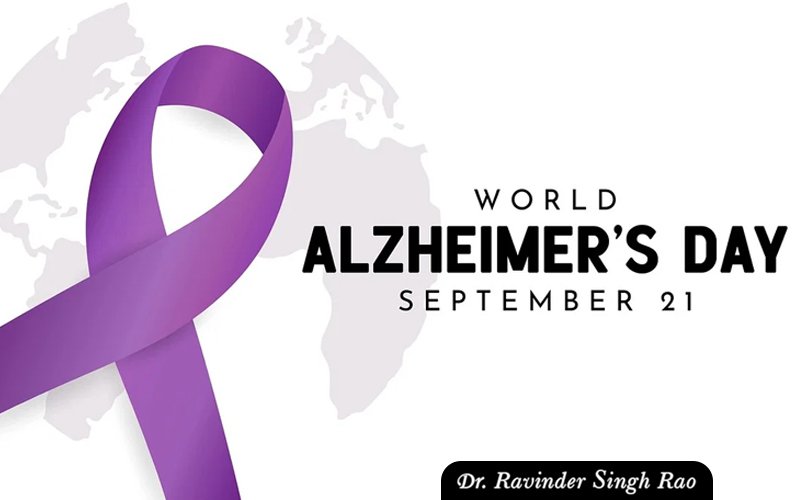
Every year on September 21, World Alzheimer’s Day is commemorated as a part of Alzheimer’s Month. Its goals are to raise awareness about the misconceptions surrounding dementia and Alzheimer’s disease as well as to support and encourage the families of those who have the disease to confront and combat it. Alzheimer’s is an incurable brain disease that worsens over time and gradually impairs thinking and memory. Short-term memory loss is the first symptom, and it progressively progresses to issues with language, judgment, comprehension of visuals, and daily activities like driving or paying payments. The World Health Organization (WHO) has produced research estimating that 7.6 million Indians will have dementia during the next ten years.
On World Alzheimer’s Day 2024, Dr. Ravinder Singh offers essential guidance on the complexities of Alzheimer’s disease, emphasizing the importance of early intervention and comprehensive care. His method is based on a multidisciplinary approach that aims to improve the quality of life for individuals impacted by combining medical care, dietary adjustments, and psychological assistance. The importance of education and knowledge in lowering stigma and promoting early diagnosis is another point made by Dr. Ravinder Singh Rao.
He hopes to enable patients, families, and caregivers to face the difficulties of Alzheimer’s with more assurance and comprehension by offering clear information and helpful guidance. His guidance is a vital resource in the ongoing efforts to improve care and outcomes for those living with Dementia.
What is Alzheimer’s Disease?
Alzheimer’s disease is a neurological disorder that results in the progressive loss of brain tissue and brain cell death. Alzheimer’s is one of the leading causes of dementia.
Alzheimer’s disease is a degenerative neurological condition that mostly impairs thinking, behavior, and memory. It is the most typical cause of dementia, a collection of brain abnormalities that leave people with a loss of cognitive function severe enough to impair day-to-day functioning. The illness is typified by the accumulation of aberrant proteins in the brain, such as tau tangles and amyloid plaques, which obstruct nerve cell transmission and ultimately cause cell death.
The Theme for World Alzheimer’s Day 2024
The Theme for World Alzheimer’s Day 2024 is “Know Dementia, Know Alzheimer’s”.
Alzheimer’s Symptoms and Signs
It might start with losing track of recent memories and progress to severe memory loss and difficulty performing daily chores. Alzheimer’s disease symptoms differ from person to person. They generally include:
- Problems with language.
- Memory loss that worsens over time.
- Loss of initiative.
- Forgetting the names of loved ones.
- Poor sense of judgment.
- Dramatic performing routine tasks.
- Difficulty thinking clearly.
- Inadequate hearing or vision.
- Dramatic changes in behavior or mood.
Alzheimer’s disease is incurable at this time and has no known cure. However, medication can assist manage some of its symptoms.
What are the Causes of Alzheimer’s Disease?
Alzheimer’s disease is thought to be mostly an aging condition, however, its precise causes are not yet understood. Plaque accumulation in the brain seems to be the main cause of Alzheimer’s. These plaques contain proteins responsible for the communication between brain cells (neurons). When these proteins malfunction, it affects how neurons function and sets off a chain of harmful events that ultimately result in the loss of nerve cells, or neurons.
Risk Factors for Alzheimer’s Disease
Some of the risk factors for Alzheimer’s disease include:
- High Blood Pressure: Elevated blood pressure has the potential to harm cerebral blood vessels, hence raising the likelihood of Alzheimer’s disease.
- High Cholesterol: High cholesterol can also damage blood vessels in the brain.
- Age: As people age, their likelihood of acquiring Alzheimer’s disease rises.
- Family History: You run a higher risk of developing Alzheimer’s if Alzheimer’s runs in your family.
- Head Injury: Alzheimer’s disease is more common among people who have suffered head injuries.
- Diabetes: Diabetes can damage blood vessels in the brain.
- Smoking: Smoking can harm the brain’s blood vessels.
- Obesity: Brain blood arteries can be harmed by obesity.
- Lack of Physical Activity: A lack of activity may raise the risk of Alzheimer’s disease since exercise maintains healthy blood vessels.
- Depression: Depression may indicate Alzheimer’s disease or function as a risk factor for the condition.
- Sleep Deprivation: Long-term sleep deprivation can harm brain tissue, which may have a role in Alzheimer’s development.
Care Tips to Prevent Alzheimer’s
- Supplementing with vitamins can help keep the body in check and stop the negative effects of plaque buildup.
- Social interactions.
- Changes to one’s lifestyle, such as consistent exercise and healthy eating.
- Creative work.
- Restful sleep and a regular sleep routine.
- Routine check-ups with the doctor.
Importance of World Alzheimer’s Day
Alzheimer’s is a severe brain disorder that causes confusion and memory loss. If it is not identified and treated early on, it can negatively affect a person’s capacity to learn, think, remember, solve problems, make decisions, and pay attention. It can also impair a person’s ability to manage their emotions and carry out daily activities. This grave illness affects not just the sufferers but also their friends and family. Every year, the entire September month is designated as “Alzheimer’s month.” People get together to help those affected by dementia and Alzheimer’s disease from all over the world through different Alzheimer’s groups and organizations. In addition to offering affected individuals financial and emotional support, they also plan several kinds of educational events to raise public awareness of the warning signs and symptoms, early diagnosis, and effective treatment of this severe mental illness.
FAQs
What is the purpose of World Alzheimer’s Day?
The goal of September 21st, World Alzheimer’s Day, is to increase awareness of dementia and Alzheimer’s disease throughout the world. It aims to raise public awareness, lessen stigma, and foster compassion and support for individuals who are impacted by the illness as well as their carers.
What is the theme for World Alzheimer’s Day 2024?
The Theme for World Alzheimer’s Day 2024 is “Know Dementia, Know Alzheimer’s”.
How can I recognize the early signs of Alzheimer’s disease?
Alzheimer’s early symptoms include memory loss that interferes with day-to-day functioning, difficulties with problem-solving or planning, disorientation with respect to time or location, difficulty understanding visual imagery, and personality or mood changes. Recognizing these symptoms early can lead to timely diagnosis and intervention.
What are the risk factors for developing Alzheimer’s disease?
Risk factors include genetics, age (particularly in those over 65), family history, and lifestyle choices like food, exercise, and heart health. Although many risk factors, such as age and heredity, are unchangeable, leading a healthy lifestyle can potentially lower overall risk.
What activities are held on World Alzheimer’s Day?
On World Alzheimer’s Day, there are community get-togethers, memory walks, fundraising activities, awareness campaigns, and educational programs. These activities aim to spread awareness, raise funds for research, and provide support for those affected by the disease.