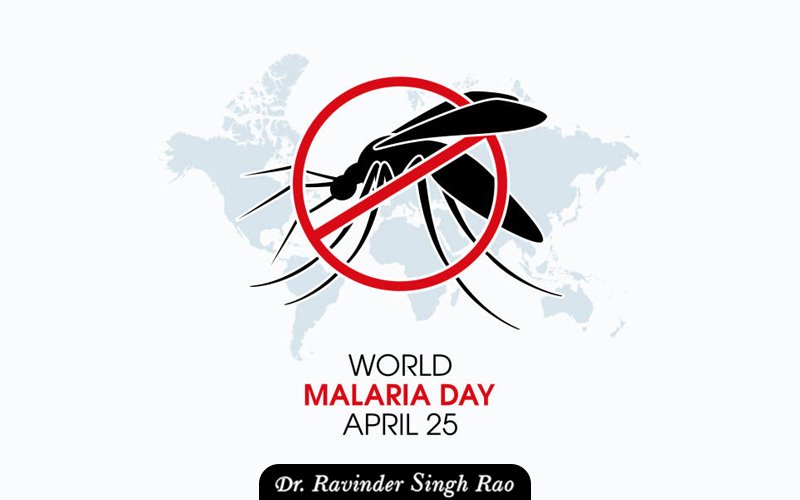
Every year on April 25, we celebrate World Malaria Day to raise awareness about avoiding malaria. It highlights how important it is to have funds and support in order to try to eradicate the illness. It’s a day to celebrate the tremendous progress made in recent years to aid those affected by the condition and to manage and control it. On World Malaria Day, parents, teachers, and other caregivers have a great chance to teach kids about important global issues while also supporting a deserving cause. This severe and potentially fatal disease, caused by Plasmodium parasites and transmitted by infected Anopheles mosquitoes, still affects a large number of individuals, especially in tropical and subtropical regions.
Dr. Ravinder Singh Rao, a well-known cardiologist, emphasizes the cardiovascular complications of malaria on World Malaria Day 2025. While malaria essentially affects the liver and blood, serious cases can lead to heart-related issues such as Arrhythmias, Myocarditis, and vascular dysfunction. He highlights the benefits of timely treatment and early detection to stop complications that may strain the heart, especially in ill-protected patients.
He recommends obstructive measures, involving vaccination, mosquito control, and access to quick medical intervention, to decrease the burden of various malaria cases. Through his expertise, Dr. Ravinder Singh Rao continues to mentor healthcare professionals in the public in understanding the interconnection between cardiovascular health and malaria, strengthening the need for a proactive approach in fighting this disease.
Heart Doctor, TAVI Surgery, TAVI Procedure, Best Cardiologist, TAVI Cardiologist In India, Cardiologist in Jaipur
The Theme for World Malaria Day 2025
The 2025 Theme for World Malaria Day is “Malaria Ends With Us: Reinvest, Reimagine, Reignite,” which highlights the need for renewed commitment, continued investment, and innovative strategies in the fight against malaria.
World Malaria Day Timeline
- 1500s (New World): Spanish invaders brought malaria to the Americas.
- 1600s (Fever Tree): Missionaries and Colonizers used the Cinchona tree bark to cure malaria.
- 1821 (Quinine): The bark of the cinchona contains quinine, which French scientists refined and discovered to be useful in treating malarial fevers.
- 1940s-1970s (Eradication): DDT was partially responsible for the eradication of malaria in the West, and many other countries followed suit.
- May 2007 (World Malaria Day Established): The day provides information and education about malaria on a global scale.
How to Observe World Malaria Day
- Share the Details
Education is key. Posting this information on your social platforms will increase awareness about this deadly but avoidable disease.
- Make a Donation
There are several valuable nonprofit groups working to bring malaria treatment tools to the countries that need them most. See how you can assist by sharing your time or making a financial donation to help their efforts.
- Organize an Event
Ask people or the community to support a reputable malaria prevention charity. Almost everyone knows about malaria, but do they know how effortless some of the prevention tools are?
Why World Malaria is Important
- Malaria Killed 435,000 People in 2017
Progress is being made on decreasing several new malaria cases. The diseases continue to kill hundreds of thousands of individuals every year. Sub-Saharan Africa is the region most affected.
- A Plan to Reduce Mortality Rates by 90% Over the Next Decade
World Health Organization uses World Malaria Day to emphasize the need for regular investment and to take up political commitment for malaria prevention to reach that target.
- Malaria is a Preventable and Treatable Disease
To share stories of how they are defeating the disease, World Malaria Day is an opportunity for health organizations involved in malaria prohibition.
How is Malaria Spread?
Malaria is a disease carried in the blood. Usually, individuals get malaria after being bitten by a mosquito. Only female mosquitoes can spread malaria. Mosquitos become infected by biting an individual who already has malaria. Them, mosquito bites other people, who also become infected with the disease. If a pregnant woman is infected with malaria, she can pass it on to her unborn baby.
How to Stay Safe from Malaria
These are the things you can do to stay safe if you are visiting an area affected by malaria:
- Before travelling to a country affected by malaria, always get professional medical advice.
- Wear long-sleeved shorts and long pants if you are outside at night.
- Spray the room with a special buy spray, and close the windows at night.
- Use mosquito repellent at night, especially before you go to sleep.
- Sleep under a mosquito net that has been act towards with mosquito repellent.
- If you have experienced any of the symptoms associated with malaria- such as a high fever, chills, or headaches- while you are in or have recently visited an area affected by malaria, seek medical attention promptly.
FAQs
What do you mean by World Malaria Day?
World Malaria Day is held annually on April 25 to increase awareness about malaria, encourage prevention efforts, and motivate global action to get rid of the disease. It serves as a platform to emphasize progress and the challenges that remain in the fight against malaria.
What causes malaria?
Malaria is caused by Plasmodium parasites, which are transferred to humans through the bites of infected Anopheles mosquitoes. Once in the bloodstream, the parasites attack red blood cells, leading to chills, fever, and other symptoms.
How can malaria be prevented?
Malaria prevention involves:
- Using insecticide-treated mosquito nets.
- Applying mosquito repellents and wearing long-sleeved clothing.
- Using indoor residual spraying (IRS) to kill mosquitoes.
- Getting antimalarial medications or vaccines in high-risk areas.
Where is malaria most prevalent?
Malaria is most common in tropical and subtropical regions, especially in South Asia, sub-Saharan Africa, and parts of Latin America. Countries with warm climates and high humidity offer ideal conditions for mosquito breeding.
How is malaria treated?
Malaria is treated using antimalarial drugs such as Artemisinin- based combination therapies (ACTs), which effectively target the parasites. Prompt treatment and early diagnosis are crucial to preventing acute complications.