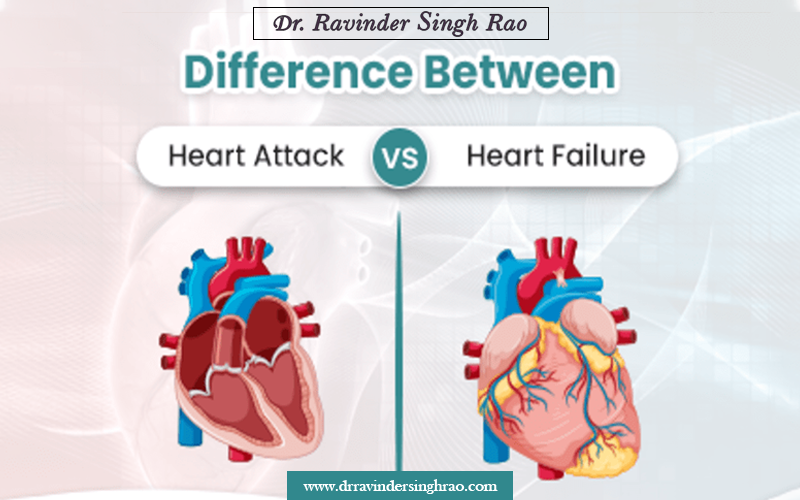
The heart is a crucial organ responsible for supplying blood throughout the human body. It is vital to general health since it supplies all body parts with oxygen and nutrients. One of the main causes of death in the world is heart illness, which can take several forms, such as heart attack or heart failure. Although both conditions are related to the heart, they are distinct and require different treatments. A heart attack and heart failure are both serious heart conditions, but they differ in their causes and effects. When a blood clot blocks the flow of blood to a portion of the heart muscle, it damages the heart tissue and results in a heart attack, also called a myocardial infarction. If left untreated, this disruption in blood flow can cause irreversible myocardial damage to excruciating chest pain.
Dr. Ravinder Singh Rao, a renowned cardiologist, provides valuable insights into the difference between a heart attack and heart failure, two critical heart conditions. A heart attack happens when blood flow to the heart muscle is disrupted by an abrupt obstruction in the coronary arteries. This can cause severe chest pain and lasting damage to the heart tissue. To restore blood flow and stop additional injury, immediate action is essential. Heart failure, on the other hand, is a long-term illness in which the heart’s ability to pump blood effectively is compromised by weakening heart muscles or other underlying diseases such as high blood pressure or prior heart attacks.
Heart Doctor, TAVI Surgery, TAVI Procedure, Best Cardiologist, TAVI Cardiologist In India, TAVR Cardiologist in India
Heart Attack: A Closer Look
When oxygen and nutrients cannot reach a portion of the heart muscle due to blocked blood flow, a heart attack occurs. This can occur when plaque build-up narrows or blocks one or more of the coronary arteries, which provide blood to the heart. It may also happen if a blood clot blocks blood flow in one of the coronary arteries.
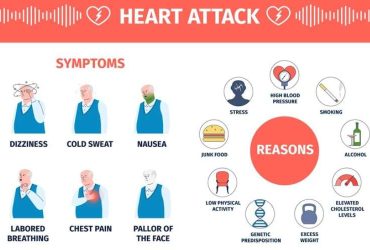
The signs of a heart attack can differ depending on several factors. The following are some of the most typical symptoms:
- Shortness of breath.
- Chest pain, discomfort, or heaviness.
- Nausea, cold sweats, or lightheadedness.
- Pain or discomfort in the back, arms, jaw, neck, or stomach.
Open heart surgery or cardiac angioplasty are two options for treating a heart attack. Additionally, a patient may also need to take blood thinners and other drugs to reduce the chance of having another heart attack. It is important to remember that a heart attack can happen even in the absence of overt signs like dyspnea and chest discomfort. Also, the symptoms can be different for women, and men. It’s critical to get immediate attention from a reputable cardiac doctor in Jaipur, Rajasthan if you or someone you know exhibits any of these symptoms. Delaying treatment can increase the risk of serious complications, including permanent heart damage or even death.
Heart Failure: A Closer Look
A cardiovascular condition known as heart failure impairs the heart’s ability to pump blood. It occurs when the heart struggles to pump enough blood to meet the body’s needs. It may occur when the heart becomes less effective due to weakness or injury.
The following categories are frequently used to classify heart failure:
- Left-sided Heart Failure: This happens when blood backs up into the lungs due to weakness or damage to the left side of the heart, which pumps blood throughout the body.
- Right-Sided Heart Failure: This occurs when blood backs up into the body due to weakness or damage to the right side of the heart, which pumps blood to the lungs.
- Systolic Heart Failure: This occurs when the heart’s pumping function becomes weak, making it difficult to push blood out of the heart and into the body.
- Diastolic Heart Failure: This happens when the heart struggles to pump blood effectively due to a malfunction in its relaxation and filling capacity.
Although there are many different heart failure symptoms, the following are the most typical ones:
- Swelling in ankles, legs, feet, or abdomen due to fluid buildup.
- Rapid or irregular heartbeat.
- Persistent coughing or wheezing brought on by lung fluid accumulation.
- Dizziness, Fatigue, or weakness due to a lack of nutrients and oxygen.
- Breathlessness, even in the absence of strenuous activity.
Similar to a heart attack, heart failure is a serious illness that has to be treated right away. Seeking treatment from the top cardiologist in the area is crucial if you or someone you know suffers from these symptoms. Managing symptoms and treating the underlying cause of heart failure are the main goals of treatment. This can include lifestyle changes, medication, and medical procedures, such as implantable devices or heart transplants.
Heart Attack Vs. Heart Failure: What is the Difference?
A heart attack is a potentially serious disorder that necessitates immediate medical attention, including cardiac angioplasty. Heart failure, on the other hand, is a progressive illness that causes the heart muscles to gradually weaken. If left untreated, heart failure can result in a wide array of complications, including Arrhythmias, renal failure, aortic valve stenosis, and heart attack.
Dr. Ravinder Singh Rao is a renowned heart specialist in Jaipur, India, often regraded as one of the best TAVR experts in India. Feel free to consult with Dr. Ravinder Singh Rao about your treatment choices if you or someone you know has been diagnosed with heart failure.
FAQs
What is a heart attack?
A heart attack, sometimes called a myocardial infarction, happens when a blood clot blocks the flow of blood to a portion of the heart muscle. Breathlessness, chest pain, and other symptoms may result from this blockage’s destruction or damage to a portion of the heart muscle.
What is heart failure?
Congestive heart failure, often known as heart failure, is a chronic illness in which the heart cannot effectively pump blood to satisfy the body’s demands. Heart attacks, excessive blood pressure, weakening of the heart muscle, and other heart diseases can all cause it.
How do heart attacks and heart failure differ in terms of their causes?
When one or more coronary arteries suddenly become blocked, blood flow to the heart muscle is disrupted, which results in a heart attack. Heart failure, on the other hand, is a progressive ailment that arises from disorders such as coronary artery disease, high blood pressure, prior heart attacks, or weak heart muscles that hinder the heart’s ability to pump blood efficiently.
Can a heart attack lead to heart failure?
Yes, a heart attack can damage the heart muscle, and over time, this damage may contribute to heart failure. The heart’s capacity to pump blood may be compromised if a significant portion of the heart muscle is impacted, which could result in heart failure as a long-term consequence.
What are the main symptoms of a heart attack?
Severe chest pain, shortness of breath, perspiration, lightheadedness, nausea, and agony that may spread to the arms, neck, jaw, or back are the most typical signs of a heart attack. It is a medical emergency that requires immediate treatment.