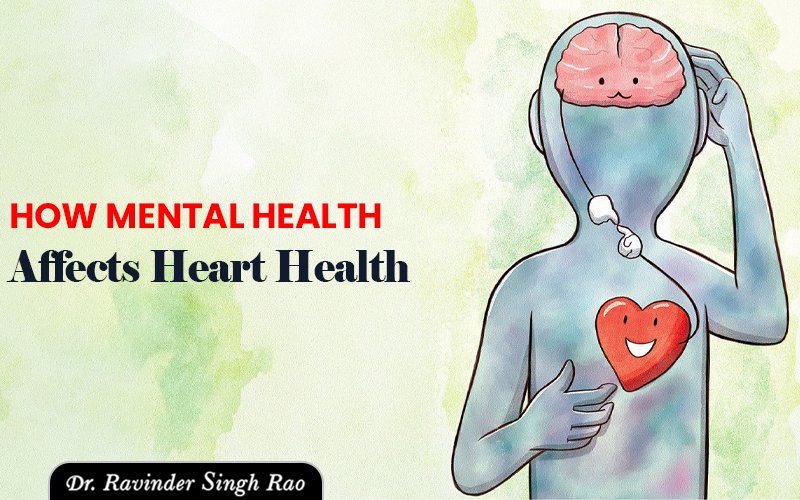
There are evident connections between heart and mental health; more and more research indicates that stress is a major risk factor for coronary heart disease. Mental health has an important impact on heart health, as chronic stress, depression, and anxiety can contribute to the development and progression of cardiovascular disease. The body releases stress hormones like cortisol and adrenaline in response to continuous psychological stress. These hormones can raise blood pressure, heart rate, and inflammation, all of which put strain on the heart and blood vessels. Additionally, poor mental health may lead to unhealthy behaviors such as poor diet, smoking, physical inactivity, or lack of sleep, further increasing the risk of heart problems. Maintaining a healthy heart and lowering the risk of heart disease can be greatly aided by addressing mental health through therapy, lifestyle modifications, and support networks.
Dr. Ravinder Singh Rao says when you are facing heart disease, whether it’s blocked arteries, angina, or recovering from a heart attack, your mental health plays a very real role in how your heart does. Anxiety, stress, and depression raise stress hormones like Adrenaline and Cortisol. These hormones put stress on the heart and blood vessels by raising blood pressure, quickening the heartbeat, causing inflammation, and thickening the blood. More concerning, mental stress itself can cause silent heart ischemia, or decreased heart blood flow, particularly in those who already have coronary heart disease, raising the risk of serious events.
Heart Doctor, TAVI Surgery, TAVI Procedure, Best Cardiologist, TAVI Cardiologist In India, TAVR Cardiologist in India
TAVI Expert in Jaipur – Cardiologist Expert in Jaipur – Heart Specialist Doctor in Jaipur
Heart Disease is not Just Physical
For decades, Physicians and healthcare organizations advise keeping an eye on cardiovascular disease risk factors that are connected to physical wellness. These involve physical inactivity, cholesterol, smoking, and alcohol consumption. Even though each of these contributes to heart health and general well-being, one element is lacking. An increasing amount of research indicates that stress is a major risk factor for coronary heart disease. Additionally, higher levels of stress might worsen risk factors like obesity, high blood pressure.
It’s Possible for Stress to Cause Heart Attack
In 2004, the INTERHEART study concluded that acute myocardial infarction, the medical term for a heart attack, was “significantly related to psychosocial factors like stress. Researchers determined that stress was an independent risk factor. It had no direct connection to more established risk factors like high blood pressure or cholesterol, smoking, drinking, eating, or exercising, nor was it connected to the demographics or geographic location of the patients.
Knowing the Different Types of Stress
It’s critical to understand how various types of stress affect heart health in order to appropriately address, manage, and possibly lessen stress.
- Acute Stress occurs occasionally but also suddenly. Extreme stress can be brought on by a phone call that interrupts a crucial meeting, a near-fatal vehicle accident, a natural disaster, or an exciting sporting event. In these situations, someone may get a headache, feel their heart race, or experience chest pain.
- Episodic Acute Stress happens more frequently. Acute stress might happen frequently due to circumstances like living paycheck to paycheck or being in a high-pressure work or school environment. This kind of stress can have an indirect impact on heart health by causing energy loss and unhealthy coping mechanisms, or it can directly affect heart health by raising blood pressure.
- Chronic Stress is drawn out over months, years, or decades. Trauma from abuse, poverty, or discriminatory practices like racism and sexism could be the cause. The circulatory, immunological, endocrine, and neurological systems may all undergo physiological alterations brought on by prolonged stress, which could have a negative effect on heart health.
- Environmental Stress is a negative response to something that happens in the outside world. Individuals may experience stress due to a loud noise, a bright light, or a rapid movement. Although the effects might be comparable to those of acute stress, environmental stress may be more difficult to control due to its unpredictability.
- Psychosocial Stress stems from an emotional stimulus. Examples may include the death of a loved one, lack of social interaction, job loss, or the burden of taking care of someone who’s sick. Similar to chronic stress, these forms of stress may have an effect on heart health, particularly if the underlying reason is hard to address.
Taking Steps to Reduce Stress
Stress can have a negative impact on heart health, so it’s important to know how to handle it. These tips from the American Heart Association and Centers for Disease Control and Prevention may help.
- Spend less time sitting down. Take brief pauses during the day to meditate or engage in physical activity. If at all possible, go outside.
- Take a moment to pause and write down three things that bring happiness or cause laughter.
- Seek support from friends, family, or neighbors, particularly if stress is contributing to feelings of despair or anxiety.
- Get at least seven hours of sleep. Ensure the space for sleeping is dark and cool, and try to relax before bedtime.
- Limit or stop using alcohol, tobacco, or recreational drugs as a coping strategy.
- Consult a healthcare professional if stress-reduction techniques don’t seem to be working and/or anxiety or depression symptoms continue.
The Importance of Mental Health Awareness
Stress is a part of everyone’s life. It is critical to understand when it is beneficial and when it is detrimental, as well as how the latter may be detrimental to the heart. The first crucial step in developing more heart-healthy, mindful behaviors is identifying how you usually handle stress in your life. However, if stress becomes too much for you, seek the assistance of a mental health specialist who can assist you in identifying a coping mechanism. Learning how to reduce stress has many physical and mental benefits, and it all may take is a few simple actions every day.