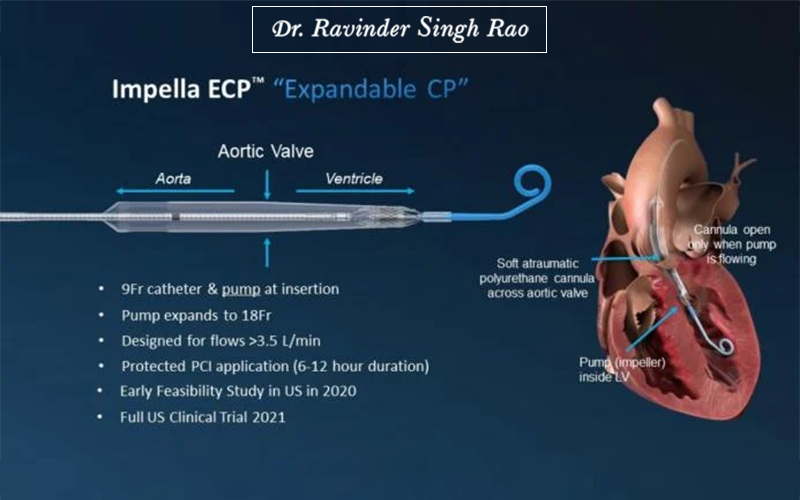
The Impella heart pump is the world’s smallest heart pump, and it is used to keep blood flowing during high-risk protected percutaneous coronary procedures (PCI). The Impella is a portable ventricular assist device. This means that it helps the ventricles work properly. These are the lower chambers of the heart that send blood from the heart to the rest of the body. It can assist with heart failure and other heart conditions. There are three major reasons why a person could require an Impella. These are as follows:
- Heart Failure: An enlarged and weak heart cannot properly pump blood throughout the body, however, the Impella can help enhance blood flow. Dr. Ravinder Singh Rao recommends it to someone awaiting heart surgery or a heart transplant.
- Cardiogenic Shock: Cardiogenic shock, which impairs the heart’s ability to pump blood, can occur as a result of a heart attack or other emergency. The Impella circulates blood through the ventricles, allowing the left ventricle to rest and increasing the likelihood of recovery from cardiogenic shock.
- PCI: Surgeons use PCI procedures to treat clogged arteries by inserting stents or balloons. They can save lives, but they can also endanger patients who have heart problems. The Impella can assist in sustaining blood flow through the organ during these procedures.
Unlike some other cardiac pumps, the Impella does not require heart surgery for insertion. Instead, Dr. Ravinder Singh Rao makes a small incision in the leg to access the femoral artery. They next insert the pump through the femoral artery into the left ventricle.
How Impella Heart Pump Works
The heart is divided into four chambers. The atria are the top two chambers that pump blood to the ventricles, which are the lower two chambers. The blood is subsequently circulated throughout the body by the ventricles. The Impella Heart Pump is popular for its sleek design and ease of use. The slim design reduces patient discomfort and inadvertent injury to the arteries during insertion. Every model of a device made by any business must be FDA-approved. It is made up of a short, thin metal tube bent at about a 30-degree angle. First, an incision is made on the upper thigh. The metal tube is put into a catheter, which is then carefully threaded into the femoral artery all the way to the heart.
During a PCI procedure, the pump can attain a blood flow or pumping rate of 2.5 to 5 liters per minute, depending on the circumstance. When the procedure is over and the pump is no longer needed, it is drawn back into the catheter and out of the body. In some cases, the pump is retained in place for 4-5 days to maintain cardiac function stability. The Impella performs the function of the left ventricle by pumping blood from the heart to the rest of the body. This serves numerous purposes, including:
- allowing the left ventricle to recover and rest after cardiogenic shock.
- Ensuring enough blood flow when the heart isn’t functioning properly.
- assisting in the protection of the heart and organs during specific medical procedures, including PCIs.
How is Impella Placed in the Heart?
The Impella draws blood from the ventricle and pushes it into the aorta, where it is oxygenated and delivered to the rest of your body. The Impella is a minimally invasive medical device that provides the heart with temporary mechanical circulatory assistance. The Impella, a small mechanical circulatory support device, is inserted into the heart using a minimally invasive procedure called percutaneous insertion. A skilled interventional cardiologist Dr. Ravinder Singh Rao guides a thin catheter through a blood vessel in the wrist or groin and advances it into the aorta, the body’s main artery.
The catheter is then carefully inserted into the heart’s left ventricle. The Impella device is then pushed through the catheter to the left ventricle. The Impella operates by collecting blood from the left ventricle and pumping it into the aorta, lowering the stress on the heart and increasing blood supply to essential organs.
Risks & Benefits of Impella Heart Pump
People who require an Impella typically have major health concerns, such as heart failure. These issues can make inserting the device more challenging, as well as raising the risk of infection and other unwanted effects. Some potential risks include:
- Bleeding that may become life-threatening.
- Damage to the heart.
- Damage to the blood vessels.
- Kidney failure.
- Liver failure.
- Infection, including life-threatening sepsis.
- Dangerously low blood pressure.
- Heart attack.
- Death.
- Dangerous heart Arrhythmias, or an irregular heartbeat.
Advantages of The Impella Heart Pump
The Impella Heart Pump can be viewed as a better alternative to the Intra-Aortic Balloon Pump (IABP). It offers numerous benefits to both the patient and the practitioner.
- Supports Your Heart Function: In a protected PCI, A healthy blood flow (perfusion) to all organs is required to avoid the risk of hypoxia (lower oxygen levels owing to reduced blood flow), which is a risk for organ failure.
- Reduces Heart Failure Symptoms: Typical symptoms of heart failure such as shortness of breath, fatigue, coughing, and swelling, were fewer in Impella-treated patients.
- Fewer Follow-up Visits: Impella-treated patients experience fewer heart-related complications than IABP patients.
- Fewer Adverse Events: Compared to alternative kinds of heart support, Impella-treated patients had reduced occurrences of death, heart attack, and stroke throughout a three-month period after the surgery.
limitations/ Complications
- Thrombus or Blood clots: A blood clot in the left ventricle may be pulled into the Impella and the aorta and then spread around the body, posing many hazards.
- Vascular Access-Site Issues: The size of the sheath used to push the catheter can be a problem. It can induce hematoma (bruising), bleeding, and blood vessel damage.
- Infection Risk: As an intrusive device, there is a danger of infection at the insertion site.
- Limited Cardiac Output: The Impella offers limited cardiac output compared to the heart’s natural function.
- Hemolysis: The device can damage red blood cells, leading to anemia, hemolysis, and other related complications.
- Blood Thinning: Anticoagulation therapy is usually required for patients, which can result in bleeding issues.
- Complications during Removal: Removing the device might be difficult and may result in complications.
The procedure of the Impella Heart Pump
A doctor can install the Impella while a patient is awake. This may be perfect for folks who cannot safely be anesthetized or wish to remain awake. If a person is awake during the procedure, a doctor will usually give them drugs and pain medication to help them feel relaxed and groggy. Some people can be given general anesthesia, which means they will be sleeping and have no recollection of the surgery. To insert the Impella, Dr. Ravinder Singh Rao makes a small cut in the upper thigh, near the groin. They then thread the gadget up to the heart using a long, thin catheter. Once the device is in the heart, he removes the catheter.