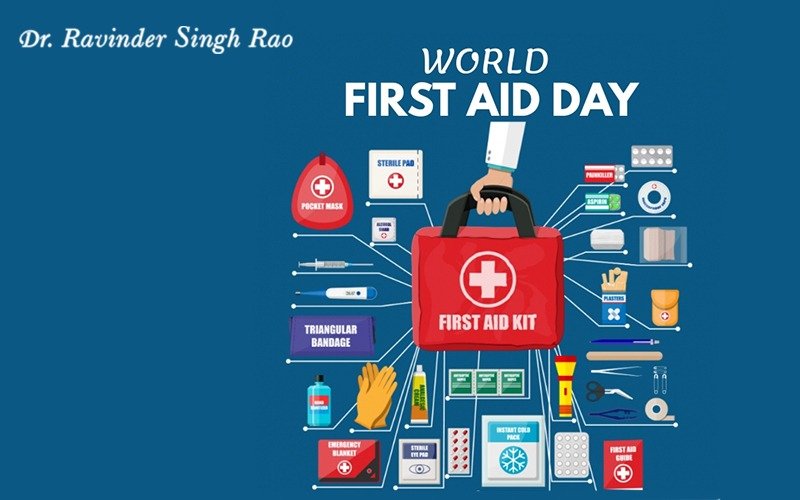
Medical crises and accidents can happen anywhere, at any time, and frequently have just a few seconds to make a significant difference. We are reminded on World First Aid Day that prompt attention can save lives. World First Aid Day will be observed on 12th September 2026, bringing renewed focus to community preparedness and emergency readiness. Although this year’s official theme emphasizes the strength of everyday bravery, the basic goal is still the same: giving regular people amazing, life-saving abilities.
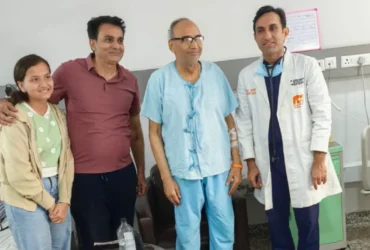
On World First Aid Day 2026, Dr. Ravinder Singh Rao will guide and educate people on the importance of first aid and timely emergency care. His guidance will emphasize critical first-aid procedures, rapid reaction methods, and the significance of maintaining composure in medical crises. The session aims to empower individuals with practical knowledge that can help save lives and promote greater awareness about first aid and emergency preparedness.
What is World First Aid Day?
World First Aid Day is a global celebration created to raise awareness of the value of first aid education and provide the general people with access to life-saving techniques. The main objective is to promote universal first aid education, which will shorten the time between an emergency and the arrival of medical professionals. Incidents like severe bleeding, cardiac arrests, or choking require immediate action. Raising awareness helps prevent observers from feeling powerless in times of emergency.
What is the Theme of World First Aid Day 2026?
The official theme for World First Aid Day 2026 is “First Aid in Migration Contexts.” The major medical, physical, and psychological vulnerabilities that millions of international migrants, refugees, and displaced people suffer along dangerous transit routes are the subject of this year’s attention. People who are constantly on the go often face obstacles to receiving official healthcare, therefore providing easily accessible, culturally aware, and prompt first aid training is essential to closing the gap. By emphasizing inclusive emergency support, such as treating trauma, dehydration, exhaustion, and psychological distress, this year’s celebration emphasizes the ability of togetherness and humanitarian action to protect dignity and save lives, regardless of administrative status.
Why Should Everyone Learn Basic First Aid?
Domestic mishaps like cuts in the kitchen, unintentional poisoning, restroom slips, or child choking are common. By being familiar with home first aid, minor mishaps can be prevented from becoming medical emergencies.
Schools are hubs of active children. Playground injuries, allergic reactions, and unexpected illnesses can be properly managed by teachers and older pupils who possess first aid expertise.
Risks in office settings include industrial floor injuries and sudden cardiac episodes at desks. On-site first aid responders with training are frequently necessary to comply with workplace safety regulations.
Floods, earthquakes, and storms disrupt emergency infrastructure. Post-disaster casualties are reduced in self-sufficient communities capable of providing initial trauma care.
Traffic collisions demand immediate assessment. On highways, the ability to manage victims without aggravating injuries (such as spinal damage) might be the difference between life and death.
First Aid Awareness for Children and Ypung People
Children can learn how to respond appropriately in an emergency by receiving basic safety education at a young age. Simple skills like alerting an adult, requesting assistance, identifying hazardous circumstances, and avoiding needless risks can be taught to children. Schools can incorporate age-appropriate first aid and emergency preparedness activities into safety programs. These programs can foster the development of responsible behaviors while teaching kids the importance of safety assisting others.
Essential First Aid Skills Everyone Should Know
- CPR: Restores a portion of the oxygenated blood flow to the heart and brain in the event of a cardiac arrest.
- Managing Bleeding: Direct pressure using clean cloth or gauze helps control and stop severe hemorrhaging.
- Burns: Thermal damage can be reduced by cooling the impacted region beneath running water.
- Choking: The Heimlich maneuver, which involves abdominal thrusts, opens blocked airways.
- Fractures: Immobilizing the injured limb with splints prevents secondary bone or tissue injury.
- Fainting: An unconscious person’s legs can be raised to help restore blood flow to their brain.
- Seizures: Cushioning the head and clearing sharp objects away protects a convulsing individual.
- Heat Stroke: Hyperthermia can be controlled by moving the person to a shaded area, using wet towels to cool the body, and, if aware, giving fluids.
- Poisoning: Internal injury can be avoided by identifying the consumed material and promptly contacting poison control without producing vomiting (unless recommended).
- Heart Attack: Heart muscle can be preserved by identifying chest pain that radiates to the arm and giving recommended drugs (like aspirin).
- Stroke: Utilizing the FAST test (Face drooping, speech difficulty, arm weakness, time to call) ensures rapid neurological intervention.
Conclusion
World First Aid Day in 2026 serves as a crucial reminder that awareness and education are the first steps toward emergency preparedness. Knowing how to administer first aid can help people react appropriately to medical emergencies and accidents while professional assistance is being sent. By learning basic first aid, keeping first aid kits readily available, taking part in training programs, and motivating others to improve their readiness, people and organizations can take a concrete step toward safety this World First Aid Day.
FAQs
What is World First Aid Day 2026?
World First Aid Day 2026 is an awareness day focused on educating people about emergency response, first aid, and lifesavig skills.
Why is First Aid important?
First aid offers prompt assistance and can lessen the severity of injuries until more qualified medical attention is available.
Who can learn first aid?
Regardless of age or occupation, anyone can learn basic first aid because it can be helpful in common emergencies.
What are some basic first-aid skills everyone should know?
Basic skills include responding to burns, bleeding, fainting, choking, and other common emergencies while seeking professional medical help.
How can companies promote first-aid awareness?
Employers can plan emergency preparedness exercises, awareness campaigns, first-aid training courses, and staff education initiatives.